Paint Protection Film (PPF) is one of the best ways to keep a car’s paint safe from scratches, stone chips, road debris, and harmful UV rays. Many car owners in Abu Dhabi worry about what happens when it is time to remove the film. They often ask if the paint underneath will stay in good condition.
The simple answer is no; removing Paint Protection Film does not damage original factory paint when it is removed correctly. High-quality PPF is made to be removed without harming the vehicle’s clear coat.
Problems usually happen when low-quality film is used, the film stays on the car for too many years, or it is removed with the wrong method.
Professional removal using the right tools, controlled heat, and safe adhesive removers helps protect the paint and leaves the surface ready for a fresh layer of protection.
Why Is PPF Designed to Be Removed Safely?
Modern paint protection film is made from thermoplastic polyurethane (TPU), a flexible material that protects the paint while remaining removable.
Manufacturers design the adhesive layer to hold the film firmly without bonding permanently to factory paint. This allows technicians to remove the film when it reaches the end of its service life.
Good-quality film also protects the clear coat from UV damage, light scratches, bug stains, bird droppings, and road debris, helping the original paint stay in excellent condition for many years.
When Can Removing Paint Protection Film Damage the Paint?
Most paint damage happens because of poor installation, poor-quality materials, or incorrect removal methods rather than the film itself.
The risk becomes higher when the vehicle has aftermarket paint repairs instead of the original factory finish.
In Abu Dhabi, strong sunlight and high temperatures can also make old film harder to remove if it has been left on the car beyond its recommended lifespan. Understanding these risks helps owners avoid costly repairs.
1. Repainted or Poorly Repaired Panels
Factory paint is baked and cured under controlled conditions, making it much stronger than many aftermarket paint jobs.
If a panel has been repainted and the paint was not fully cured or prepared properly, removing the protective film can lift the paint from the surface.
This is one of the most common reasons people believe PPF damages paint, even though the actual issue is poor paint adhesion underneath.
2. Low-Quality Paint Protection Film
Not all protective films are made to the same standard. Cheap products often use lower-grade adhesives that become hard and brittle after years of exposure to heat.
These adhesives can bond too strongly with the paint, making removal much more difficult. Premium TPU films from trusted manufacturers are tested to resist heat, maintain flexibility, and allow cleaner removal with less adhesive left on the vehicle.
3. Leaving the Film on Too Long
Every protective film has an expected lifespan, usually between 5 and 10 years, depending on the brand and driving conditions. Abu Dhabi’s hot climate can speed up aging because constant UV exposure weakens the film and its adhesive.
Once the film becomes dry, cracked, or yellow, removal becomes more difficult. Replacing aging film at the recommended time helps reduce the risk of adhesive residue and keeps the paint in better condition.
4. Incorrect DIY Removal
Trying to remove old film without proper knowledge can cause unnecessary damage. Pulling the film quickly, peeling it when it is cold, or using sharp blades may scratch the clear coat or even lift weak paint.
Many people also use household chemicals that are not safe for automotive finishes. Professional tools and correct removal techniques greatly reduce these risks and protect the vehicle’s appearance.
How Professionals Remove PPF Without Damaging Paint?
Professional technicians follow a careful process that protects both the paint and the clear coat. Instead of forcing the film off, they soften the adhesive first and remove it slowly.
Each step reduces stress on the paint and leaves the surface clean. This method is especially important for vehicles exposed to Abu Dhabi’s harsh climate because older film usually requires extra care during removal.
Step 1: Controlled Heat or Steam
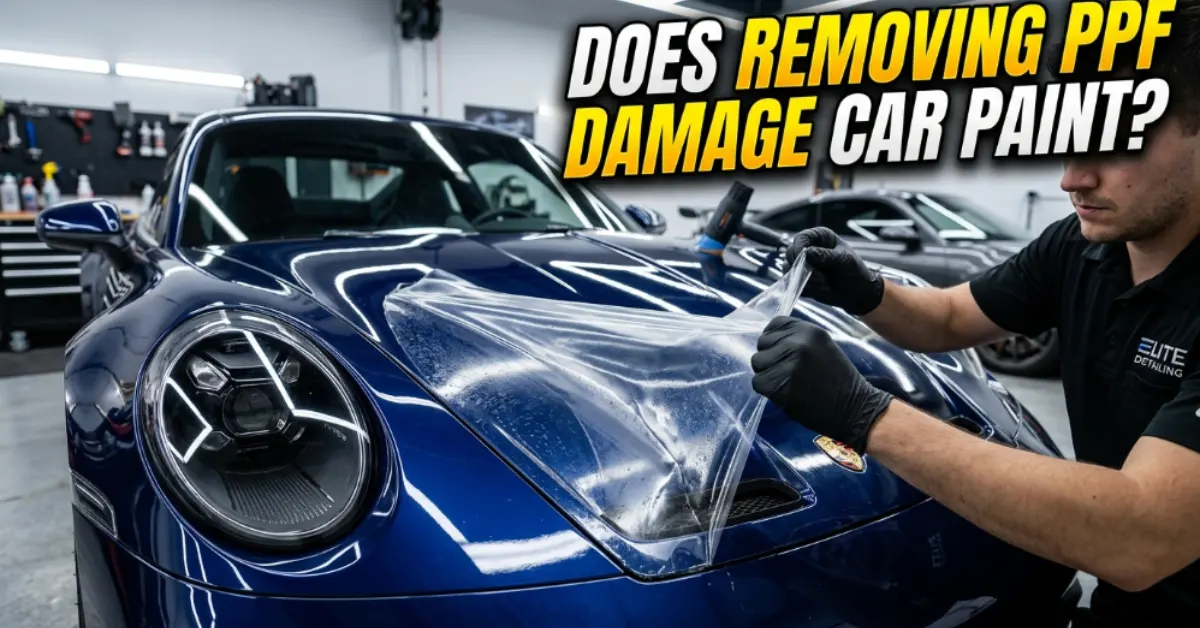
The first step is warming the film with a heat gun or commercial steam machine. Gentle heat softens the adhesive underneath and makes the film more flexible. This prevents sudden tearing and reduces the force needed during removal.
Proper temperature control is important because excessive heat may affect the paint or nearby trim components.
Step 2: Slow Low-Angle Peeling
After warming the film, technicians pull it back slowly at about a 45-degree angle against itself rather than pulling straight upward.
This technique spreads the force evenly across the adhesive and lowers the chance of lifting paint. Patience is important because rushing the process can leave more adhesive behind or increase stress on the surface.
Step 3: Paint-Safe Adhesive Removal
Even high-quality films may leave a small amount of adhesive after removal, especially in hot climates. Professionals apply paint-safe adhesive removers that dissolve the remaining glue without harming the clear coat.
They avoid using metal scrapers or rough tools that could scratch the paint. Once the adhesive is removed, the surface becomes smooth and clean again.
Step 4: Light Machine Polishing and Protection
The final step is a light machine polish to remove any minor surface marks, restore gloss, and improve the paint’s appearance.
This process does not remove healthy paint but gently refines the clear coat. Many owners choose to install a new protective film or apply a ceramic coating immediately afterward to continue protecting the vehicle from UV rays, sand, and daily driving hazards.
Signs Your PPF Should Be Removed
Aging protective film becomes more difficult to remove and may not protect the paint as effectively as it once did. Replacing it before it completely fails helps maintain the vehicle’s finish. Watch for these common warning signs:
- Yellowing or discoloration caused by long-term UV exposure.
- Cracks or brittleness in the film surface.
- Peeling edges that collect dust and moisture.
- Bubbles or lifting areas that continue to grow.
- Heavy staining that no longer cleans away.
- Film older than the manufacturer’s recommended lifespan.
How Abu Dhabi's Climate Affects PPF Removal?
Abu Dhabi experiences extreme heat, intense sunlight, and high UV levels throughout much of the year. These conditions speed up adhesive aging and reduce the flexibility of older protective film. Vehicles parked outdoors for long periods face even greater exposure.
Regular inspections help identify aging film before removal becomes difficult. Keeping the vehicle clean and replacing worn film on time makes future removal much safer and helps preserve the factory paint for longer.
Tips to Keep Your Car Paint Safe During PPF Removal
Vehicle owners can reduce the chance of paint problems by following a few simple maintenance practices before removal. Choosing quality products and experienced installers makes a big difference throughout the life of the protective film.
- Choose Premium TPU Film: Install high-quality TPU film from trusted brands for easier removal and better long-term paint protection.
- Replace PPF on Time: Remove and replace aging film within the recommended lifespan to prevent hardened adhesive and difficult removal.
- Avoid DIY Removal: Do not remove the film yourself without proper tools, experience, and the correct removal technique.
- Never Use Sharp Tools: Avoid blades, knives, or metal scrapers because they can scratch the clear coat and paint.
- Inspect Repainted Panels: Have repaired or repainted panels checked before removal to reduce the risk of paint lifting.
- Hire Experienced Technicians: Professional installers use safe methods, controlled heat, and paint-safe products for damage-free film removal.
- Protect the Paint Again: Apply new PPF or a ceramic coating after removal to maintain long-term paint protection and shine.
Does Factory Paint Stay Better Under PPF?
Yes, factory paint usually remains in excellent condition under properly installed protective film. Since the film blocks UV rays, stone chips, road debris, bug stains, and minor scratches, the paint underneath often looks newer than exposed areas.
This protection also helps maintain the vehicle’s resale value because buyers prefer cars with well-preserved original paint. When the film is removed correctly, the factory finish normally remains smooth, glossy, and free from damage.
Conclusion
Removing Paint Protection Film does not normally harm factory paint when the film is high quality and removed using the correct process. Most paint problems happen because of old film, poor-quality adhesive, repainting, or incorrect removal methods rather than the protective film itself.
Replacing aging Paint Protection Film on time and trusting trained technicians helps keep your vehicle’s finish in excellent condition. If you need professional Paint Protection Film removal, replacement, or installation in Abu Dhabi, 800Sayara offers reliable services to protect your vehicle’s paint and keep it looking its best.