Your car’s paint job is one of the first things people notice. A single scratch or rock chip can ruin that clean look fast. That is why Paint Protection Film, also known as PPF, has become one of the most popular ways to keep a car looking new.
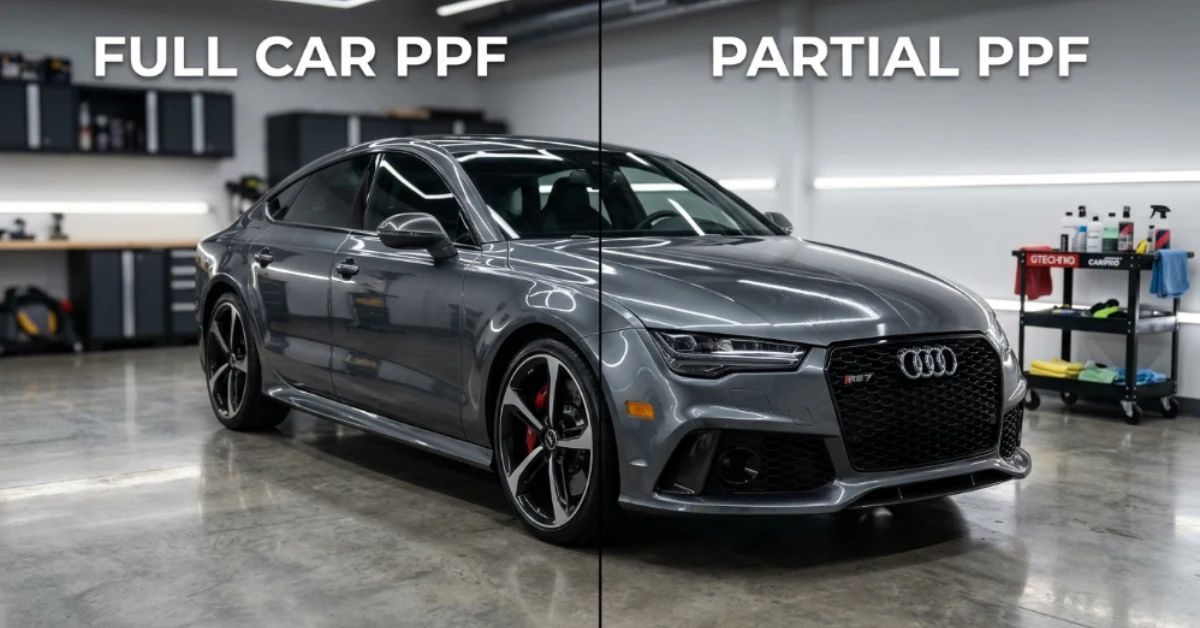
If you are trying to decide between covering the whole car or just certain parts, it helps to know what each option offers. Full coverage means every surface of your car gets a clear protective layer, while partial coverage focuses on the areas that take the most hits, like the front bumper and hood.
Both choices have real benefits, but the right one depends on your budget, how you use your car, and how long you want the protection to last. Knowing the difference between full car paint film protection and partial film protection can help you make a smart choice.
What Is Full Car PPF?
Full car PPF means the entire exterior of the vehicle gets covered with a protective film. This includes the hood, roof, doors, trunk, side mirrors, fenders, bumpers, and even the lower panels near the ground.
The film acts like a shield over every part of the paint. It protects against scratches, bird droppings, UV rays, and road debris from all directions.
This option is best for people who want complete peace of mind. If you drive on highways often or park in open areas, full coverage makes sure no part of your car is left exposed
What Is Partial PPF?
Partial PPF covers only the high-impact areas of a car. These are the spots that get hit the most during regular driving.
Common Areas Covered in Partial Protection
- Front bumper
- Hood (full or partial)
- Side mirrors
- Fenders
- Door edge guards
- Rocker panels
This option costs less and still gives strong protection where it matters most. It is a good pick for people who want to protect their car without spending too much. If you mostly drive in the city or on clean roads, partial coverage can do a great job.
Full Car PPF vs Partial PPF: Key Differences
Feature | Full Car PPF | Partial PPF |
Coverage Area | Entire exterior of the car including all panels, roof, doors, trunk, and bumpers | Only high-impact zones like front bumper, hood, mirrors, and fenders |
Level of Protection | Maximum protection on every surface from all directions | Strong protection on the most vulnerable areas only |
Cost | Higher cost due to more material and longer installation time | More budget-friendly with less material needed |
Best For | New cars, luxury vehicles, highway drivers, long-term owners | Daily commuters, city drivers, budget-conscious car owners |
Resale Value Impact | Greatly preserves resale value since all paint stays in top condition | Moderate impact on resale value as some areas may still show wear |
Installation Time | 2 to 4 days depending on vehicle size and complexity | 4 to 8 hours for most vehicles |
UV Ray Protection | Full protection from sun damage on all painted surfaces | Only covered areas are protected from UV fading |
Scratch Resistance | All panels are scratch-resistant, including doors and roof | Only selected panels resist scratches |
Rock Chip Protection | Complete defense against chips from all road directions | Strong defense on the front end where chips are most common |
Bird Dropping Protection | Entire car is safe from chemical damage caused by droppings | Only covered areas are protected |
Door Edge Protection | Included as part of full coverage | Can be added as an optional zone in partial plans |
Self-Healing Properties | Available across all surfaces if self-healing film is chosen | Available only on the areas where film is applied |
Maintenance Required | Easy to clean since the whole car is protected | Requires extra care on unprotected areas |
Lifespan of Film | Typically 7 to 10 years with proper care | Typically 5 to 7 years depending on coverage zones |
Ideal Climate | Best for harsh climates with heavy sun, sand, or rain | Suitable for mild to moderate weather conditions |
Appearance After Install | Seamless and uniform look across the entire car | Visible edges at film borders on unprotected areas |
Paint Discoloration Risk | Very low since all paint is shielded from the elements | Moderate risk on exposed areas over time |
Recommended For New Cars | Highly recommended to keep factory paint intact | Acceptable as a starting point before full upgrade |
Customization Options | Less flexible since it covers everything | Highly flexible, you choose exactly which zones to protect |
Overall Value | Best long-term value for paint preservation | Best short-term value for targeted protection on a budget |
The biggest difference between the two is how much of the car gets protected. Full coverage gives all-around defense, while partial coverage focuses on specific zones. In terms of cost, partial PPF is more budget-friendly.
Full coverage requires more material and more time to install, which makes it more expensive. However, full coverage also holds the car’s value better over time because the entire paint stays in great condition. Partial protection may leave some areas open to damage, which could affect resale value later.
How Is PPF Installed?
The PPF installation process is done in steps to make sure the film sticks well and looks clean.
Step-by-Step Installation Process
Step 1: Thorough Cleaning First: The car is washed and cleaned very well to remove any dust, dirt, or grease from the paint surface before anything else is done.
Step 2: Precise Measuring and Cutting: The installer then measures and cuts the film carefully to fit each part of the car in the right shape and size.
Step 3: Careful Film Application: The film is applied using a special solution that helps it slide into the correct position without trapping any air bubbles underneath.
Step 4: Smooth and Flat Finish: A squeegee tool is then used to press the film flat and push out any water or air that may be left before the film dries completely.
Step 5: Time Varies by Coverage: The whole process can take anywhere from one day to a few days depending on how much of the car is being covered.
Full Car PPF Vs Partial PPF: Which One Is Right for You?
If you have a brand-new car or a luxury vehicle, full coverage is worth every penny. It keeps the whole car safe and maintains its value for years. If you have a daily driver and want solid protection at a lower cost, partial coverage on the front end and high-risk areas is a smart move.
Think about where you drive, how often you are on highways, and what your budget allows. Both options are far better than having no protection at all.
Conclusion
Keeping your car’s paint in great shape is not just about looks. It saves you money on repairs and helps your vehicle hold its value. Whether you go with full coverage or focus on the key areas, a protective film is one of the best investments you can make for your car.
Taking time to understand the difference between full car paint film and partial film protection puts you in a better position to choose what fits your needs. Ready to protect your car the right way? Visit 800Sayara today and get expert PPF installation services for your vehicle and budget.