Car paint can get damaged very easily from road dust, strong sunlight, gravel, and small scratches. That is why many car owners choose paint protection film to keep the paint safe and clean for a longer time. It works like a clear shield on the car surface without changing its original look.
The installation usually takes around 1 to 3 days for most cars. Smaller vehicles can be finished in about 1 day, while larger SUVs or luxury cars may need 2 to 3 days. Full body coverage or complex designs can sometimes extend the time up to 4 days.
The duration depends on surface preparation, film type, and installation quality. So the real answer to how long does PPF installation take is not fixed, but mostly falls within this time range based on the vehicle and work level.
How Long Does PPF Installation Take? Step-by-Step Time Breakdown
The time of PPF installation depends on each stage of the work. It is not a single-step job. The process includes cleaning, cutting, applying, and curing the film. Each step must be done carefully because the film needs to stick perfectly without bubbles or dust.
A rushed installation can reduce the life of the film and affect the final look, so professionals always work with patience and proper timing
Step 1: Deep Cleaning and Surface Preparation
The first stage is washing and preparing the car surface. This includes removing dust, oil marks, tar spots, and tiny metal particles from the paint. A clay bar treatment is often used to make the surface smooth and ready for film bonding.
Even small dirt particles can affect adhesion, so this step is done very carefully. Depending on the condition of the car, this process can take a few hours. A properly cleaned surface is necessary for strong film grip and long-lasting protection.
Step 2: Film Selection and Pre-Cutting Work
After cleaning, the paint protection film is prepared for installation. Most workshops use digital templates that match the exact shape of car panels. These pre-cut patterns reduce manual cutting and improve accuracy.
In some cases, installers also trim the film by hand for better fitting on curved areas. This stage includes measuring each panel and planning placement. It takes time because every part of the car, like bumpers, doors, and bonnet, must be matched perfectly for a smooth finish.
STEP 3: Application of Film on Vehicle Surface
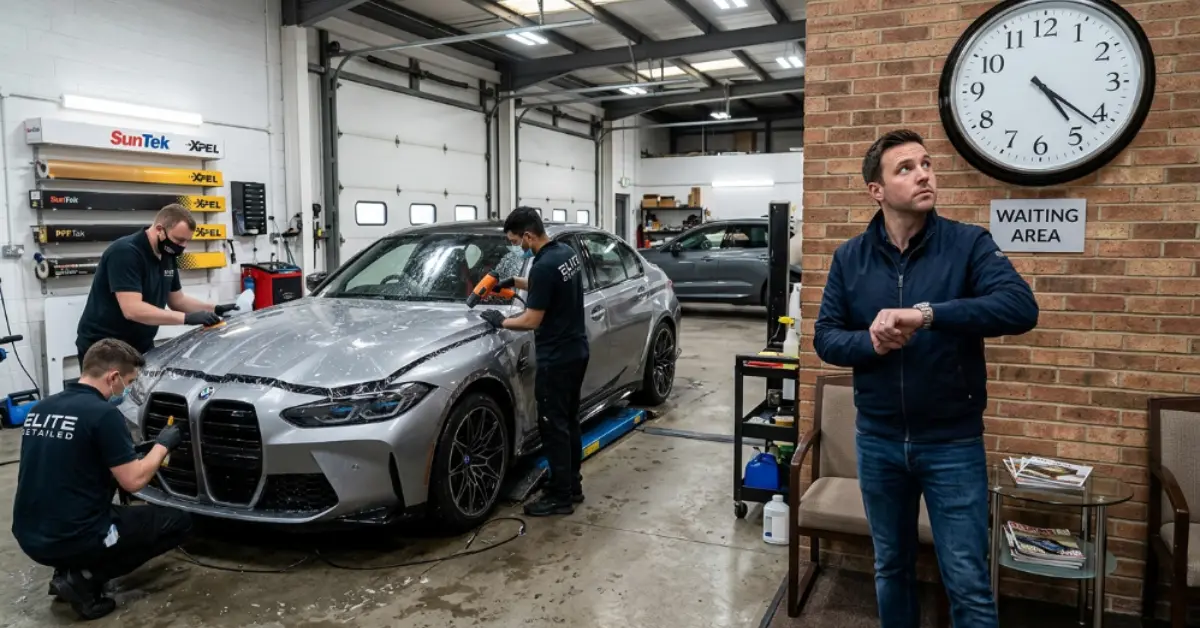
This is the most detailed step in the entire process. The film is applied using a wet installation method with a special solution that allows adjustment. Installers use squeegees to remove water and air bubbles trapped under the film.
Heat tools may also be used to stretch and shape the film around curves and edges. Large panels take more time because they need even pressure and careful alignment. This step decides the final appearance of the protection film on the car.
Step 4: Drying, Curing, and Final Checking
Once the film is applied, it needs time to settle and bond with the paint surface. This stage is called curing. During this period, remaining moisture slowly evaporates. The car is usually kept in a clean indoor space to avoid dust contamination.
Installers then inspect every panel for bubbles, lifting edges, or alignment issues. Minor corrections may be done if needed. Even after delivery, the film continues to cure for a few days for full strength and clarity.
Main Factors That Change PPF Installation Time
PPF installation time is not the same for every car. Several factors directly affect how long the process takes. Vehicle size is one of the biggest factors. A small car has fewer panels, while SUVs and sports cars have larger and more complex surfaces.
Film quality also matters because premium films require careful handling. Installer skill plays a big role, as experienced technicians work faster with fewer errors. Workshop conditions like dust control and temperature also impact the overall timing.
1. Vehicle Size and Surface Complexity
Larger vehicles naturally take more time because they have more surface area. SUVs, luxury sedans, and sports cars include curved panels, deep edges, and complex shapes. These areas need extra care to avoid wrinkles or misalignment.
Simple hatchbacks are quicker because their panels are smaller and flatter. Every extra curve increases installation time since the film must be stretched and adjusted properly for a perfect fit.
2. Installer Skill and Experience Level
A skilled installer can complete the job faster without reducing quality. Experience helps in handling film smoothly, avoiding air bubbles, and correcting mistakes quickly. Beginners may take longer because they need extra time for adjustments.
Professional detailers follow a structured process that saves time and improves accuracy. Good experience reduces rework and ensures the film looks clean and properly aligned on every panel.
3. Type of Paint Protection Film Used
Different films have different installation behavior. High-quality TPU films are flexible and durable but require careful handling. Self-healing films also need precise application to maintain their surface properties.
Cheaper films may be easier to install but often lack durability and finish quality. Premium films take more time but provide better clarity, protection, and long-term performance, which makes the extra time worth it.
4. Workshop Environment and Conditions
controlled workshop environment helps reduce installation time. Clean rooms with low dust levels prevent particles from getting trapped under the film. Temperature and humidity also affect how the adhesive reacts.
Poor conditions slow down the process because installers must fix issues more often. Proper lighting is also important to detect bubbles and alignment errors early. A well-equipped detailing center always delivers faster and better results.
Standard Time Range for Different Cars (PPF Installation)
Vehicle Type / Work Type | Coverage Level | Average Installation Time | Why It Takes This Time |
Small cars (hatchbacks) | Partial PPF | 6 to 12 hours (same day) | Smaller surface area, fewer panels, simple body shape |
Small cars (hatchbacks) | Full body PPF | 1 day | Limited curves and faster panel access |
Sedans | Partial PPF | 1 day | Moderate size, balanced panel structure |
Sedans | Full body PPF | Around 2 days | More panels, careful alignment needed for doors and bonnet |
SUVs | Partial PPF | 1 to 1.5 days | Larger panels and higher surface area |
SUVs | Full body PPF | 2 to 3 days | Big size, complex curves, bumpers and edges take extra time |
Luxury / Sports cars | Full body PPF | 2 to 3+ days | Complex design, tight curves, precision fitting required |
Premium full wrap jobs | Full coverage | Up to 3–4 days | Extra detailing, custom fitting, and multi-layer inspection |
Simple Tips to Get Faster and Better PPF Results
- Advance booking matters: Booking your service early helps avoid delays, reduces waiting time, and ensures workshop availability during busy periods.
- Choose skilled installers: Experienced technicians work faster, make fewer mistakes, and ensure smooth film application with better finishing and long-lasting protection.
- Keep car clean: A clean vehicle saves preparation time because less dirt removal is needed before starting paint protection film installation.
- Avoid rushing the process: Speeding up installation can cause bubbles or misalignment, so careful work is always better for quality results.
- Allow proper curing: Giving enough curing time helps the film bond strongly with paint, improves clarity, and ensures long-term durability and protection.
Conclusion
Paint protection film is one of the best ways to protect a car’s paint from scratches, sun damage, and road debris. The installation process includes cleaning, cutting, applying, and curing, and each step needs proper care for the best result. That is why timing can vary depending on the vehicle and working conditions.
PPF installation usually takes between 1 and 3 days, depending on car size, film type, and installer skill. Small cars finish faster, while larger or luxury vehicles need more time for careful detailing. A proper installation always focuses on accuracy and durability instead of speed, ensuring long-term paint protection.
For professional and reliable service, 800Sayara provides expert paint protection installation with quality finishing and trusted results for your vehicle.