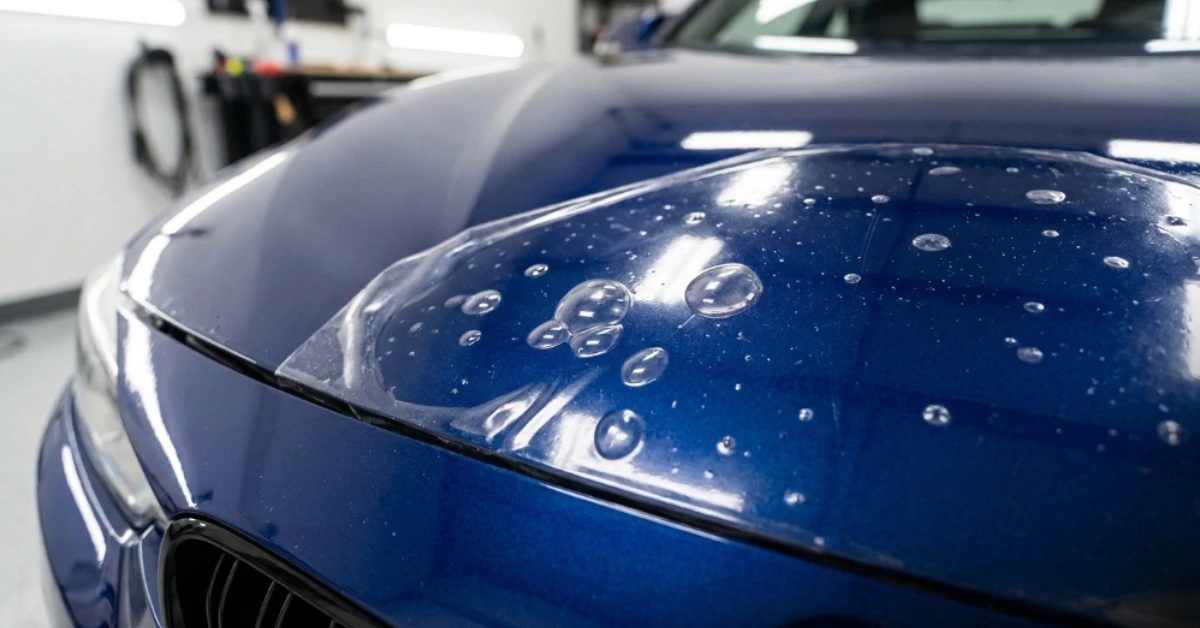
Paint Protection Film helps keep a vehicle’s paint safe from scratches, stone chips, and daily road damage. However, after installation, some owners may notice small bubbles, cloudy patches, or raised areas under the film.
These issues can affect the appearance of the vehicle and may reduce protection if ignored. Bubbles in Paint Protection Film usually happen because of trapped moisture, air pockets, dust contamination, or weak adhesive bonding.
In the UAE, high temperatures and strong sunlight can make these problems more noticeable by causing trapped moisture to expand and film edges to lift. Small water bubbles may disappear naturally during the curing process, but air pockets and dirt contamination usually need professional attention.
Correct installation, a clean working environment, and proper aftercare are important to keep the film smooth and long-lasting.
Why Do Bubbles Form Under Paint Protection Film?
Paint Protection Film is installed using a liquid solution that helps technicians position the material correctly on the vehicle surface. During installation, the film is carefully pressed with a squeegee to remove excess fluid and air.
When this process is not completed properly, some moisture or air may remain trapped underneath the film. In most cases, small water pockets are normal during the early curing period and disappear as the liquid evaporates.
However, larger bubbles, permanent air pockets, or contamination under the film indicate an installation problem that requires inspection.
Common Causes of PPF Bubbles in the UAE
1. Trapped Installation Moisture
During PPF installation, professionals use a slip solution made with water and soap to move the film into the correct position. This liquid allows better alignment and prevents the material from sticking too quickly.
If the installer does not remove all the excess solution, small moisture pockets can remain under the film. These areas often look cloudy or slightly uneven.
In the UAE climate, heat can speed up evaporation, allowing many small moisture bubbles to disappear naturally within the curing period. However, large trapped water areas may require professional correction.
2. Air Pockets Under the Film
Air bubbles occur when air becomes trapped between the paint surface and the adhesive layer. Unlike moisture bubbles, these pockets usually appear clear and round because there is no liquid underneath.
Air can become trapped due to incorrect squeegee pressure, rushed installation, or applying the film on uneven surfaces. These bubbles normally do not disappear by themselves because the air has nowhere to escape.
Professional technicians use controlled methods to remove these pockets without damaging the film or paint.
3. Dust and Sand Contamination
A clean installation environment is essential for successful PPF application. Even a small dust particle or sand grain trapped between the paint and film can prevent proper bonding.
When contamination is present, it creates a small raised spot that looks like a tiny bubble with a hard center. These spots usually cannot disappear because the particle remains trapped underneath.
In UAE conditions, airborne dust and desert sand make a controlled indoor installation area extremely important.
4. Extreme Heat and Thermal Expansion
The UAE climate creates additional challenges for vehicle protection products. During summer, vehicle panels exposed to direct sunlight can become extremely hot. This heat causes materials to expand and contract, which can affect trapped moisture and weak adhesive areas.
When moisture is trapped beneath the film, high temperatures can turn it into vapor, making bubbles appear larger. Heat can also weaken poor-quality adhesives and increase the chance of lifting around curves, corners, and edges.
5. Weak Adhesive or Poor Installation Quality
The adhesive layer is responsible for creating a strong connection between the PPF and the vehicle surface. If the paint was not cleaned properly before installation, the adhesive may not bond correctly.
Oil, wax, polish residue, or small contaminants can reduce adhesion and create areas where air enters later. Using low-quality films with weaker adhesive systems can also increase the risk of bubbling, especially in hot climates like the UAE.
Different Types of PPF Bubbles and Their Solutions
Before fixing a bubble, it is important to understand what is trapped underneath the film. Different bubble types require different solutions.
Bubble Type | Appearance | Can It Fix Itself? | Solution |
Moisture Bubble | Cloudy or hazy appearance | Often yes | Allow curing time |
Air Pocket | Clear and round bubble | Usually no | Professional air removal |
Dirt Contamination | Small bump with visible particle | No | Remove and reinstall section |
Adhesive Failure | Film lifting from surface | No | Repair or replace affected area |
Identifying the correct type prevents unnecessary repairs and helps protect the original film.
How Long Do PPF Bubbles Take to Disappear?
Small moisture bubbles are common after fresh installation and usually disappear during the curing process. Depending on weather conditions, film type, and installation quality, these bubbles may reduce within a few days to several weeks.
The UAE climate can speed up drying because of high temperatures, but exposing newly installed film to extreme heat too quickly is not recommended.
The vehicle should be allowed to cure properly according to the installer’s instructions. If bubbles remain after the recommended curing period, professional inspection is required.
How to Fix Bubbles in Paint Protection Film?
The correct repair method depends on the type and size of the bubble.
1. Allow Moisture Bubbles to Cure Naturally
If the bubbles are small, cloudy, and the film was recently installed, waiting is often the best solution. Modern TPU films allow moisture to escape slowly through the material.
Keeping the vehicle in a suitable environment and allowing normal heat exposure can help the trapped water evaporate.
Avoid pressing, cutting, or trying to remove fresh bubbles yourself because this may damage the adhesive before it has fully cured.
2. Professional Air Bubble Removal
Air pockets usually require professional correction because they do not disappear naturally. Technicians use specialized tools to release trapped air without creating visible damage.
In some cases, a professional may use a very small puncture method to remove the trapped air and flatten the film.
This should only be done by an experienced technician because incorrect handling can leave marks or damage the protective layer.
3. Controlled Heat Application
Minor bubbles and lifting areas may sometimes be corrected with controlled heat. Technicians use tools such as digital heat guns or infrared heating equipment to soften the adhesive carefully.
The softened adhesive becomes easier to reposition, allowing trapped air to move toward an edge where it can escape. Proper temperature control is important because excessive heat can damage the film surface.
Why You Should Not Pop PPF Bubbles Yourself
Many vehicle owners try to remove bubbles using needles or sharp objects at home. This can permanently damage the film and create a visible mark.
Piercing the film without proper technique may allow dirt and moisture to enter underneath. It can also damage the protective top layer and reduce the lifespan of the PPF in the UAE.
Professional repair ensures the problem is handled without affecting the vehicle’s paint or the surrounding film area.
How to Prevent PPF Bubbles in the UAE?
Preventing bubbles starts before installation and continues with proper maintenance after the film is applied.
1. Choose a Professional Installation Studio
The installation environment has a major impact on the final result. A proper PPF studio should have a clean, controlled area where dust, sand, and other particles are minimized.
Professional installers follow correct preparation steps, including paint cleaning, surface inspection, accurate cutting, and careful application. This reduces the chances of trapped contamination and installation defects.
2. Select Premium TPU Film
The quality of the film directly affects durability. Premium Thermoplastic Polyurethane (TPU) films are designed to handle UV exposure, heat, and daily driving conditions.
High-quality materials offer better flexibility, stronger adhesive performance, and improved resistance against environmental damage. Choosing reliable film helps reduce bubbling, yellowing, and premature failure.
3. Allow Proper Curing Time After Installation
Freshly installed PPF needs time for the adhesive to settle and moisture to escape. During the first 24 to 48 hours, it is better to keep the vehicle in a controlled indoor environment whenever possible.
Avoid aggressive washing, pressure cleaning, and unnecessary handling during the curing period. Following the installer’s recommendations helps the film achieve a stronger bond.
4. Maintain the Film Properly
Regular maintenance helps preserve the appearance and performance of Paint Protection Film.
Helpful practices include:
- Use pH-neutral car shampoo.
- Avoid harsh chemicals.
- Do not direct high-pressure water at film edges.
- Clean bird droppings and stains quickly.
- Use microfiber towels for drying.
- Inspect the film regularly for early problems.
Good care reduces stress on the adhesive layer and improves the film’s lifespan.
Does Ceramic Coating Prevent PPF Bubbles?
Ceramic coating can improve the surface protection of PPF, but it cannot fix installation problems or prevent bubbles caused by trapped air or moisture.
A film-safe ceramic coating creates a hydrophobic layer that helps repel water, dust, and contaminants.
It also makes cleaning easier and helps maintain a glossy appearance. However, the foundation of bubble-free PPF is proper preparation, quality material, and expert installation.
When Should You Replace Bubbling PPF?
Not every bubble requires complete film replacement. Small moisture pockets after installation are often temporary, while serious contamination or adhesive failure usually needs professional repair.
Replacement may be necessary when:
- Dirt is trapped under the film.
- Large areas have lost adhesion.
- The film is cracked or damaged.
- Bubbles continue spreading.
- The adhesive has permanently failed.
Replacing only the damaged section is often enough to restore protection and maintain the vehicle’s appearance.
Conclusion
Bubbles under Paint Protection Film can happen because of trapped moisture, air pockets, dust contamination, heat exposure, or installation problems. While small water bubbles may disappear during the curing process, permanent air pockets and contamination require professional attention.
Using premium TPU film, choosing an experienced installer, allowing proper curing time, and following safe maintenance methods can help prevent bubbling problems in UAE conditions. Early inspection is always better because small issues are easier to repair before they affect larger areas.
For professional PPF repair and installation services in the UAE, contact 800Sayara. Our skilled team can help identify film issues, restore damaged areas, and keep your vehicle protected with reliable solutions.