Your car’s paint faces many daily threats in Abu Dhabi, including strong sunlight, sand, road dust, bird droppings, and small stone chips. Choosing the right paint protection helps keep your vehicle looking newer for longer and can also protect its resale value.
The main difference is simple. Paint Protection Film (PPF) is a thick physical layer that protects against scratches, stone chips, and sand damage. Car wax adds shine and light protection but lasts only a few weeks.
Paint sealant is a synthetic coating that lasts longer than wax and offers better UV and chemical protection, but it cannot stop physical damage.
If you are comparing paint protection options for cars, the right choice depends on your budget, driving habits, and the level of protection you need.
Why Car Paint Protection Matters in Abu Dhabi?
Cars in Abu Dhabi face some of the toughest driving conditions in the world. High temperatures, strong UV rays, desert sand, and highway debris slowly damage the clear coat and paint.
Without protection, the paint can lose its shine, develop swirl marks, and become more difficult to maintain. A protective layer works as a barrier between the environment and your vehicle’s paint.
Depending on the product you choose, it can reduce oxidation, block UV rays, repel water, resist chemicals, or even absorb stone impacts. This not only improves appearance but also reduces the need for costly paint correction or repainting later.
What Is Paint Protection Film (PPF)?
Paint Protection Film is a transparent thermoplastic polyurethane (TPU) film installed directly over the painted surface. Premium films are usually 8 to 12 mils thick, making them much thicker than waxes or sealants.
This thickness allows the film to absorb impacts from small stones, road debris, and blowing sand. Many modern films also include self-healing technology. When exposed to sunlight or warm water, light scratches and swirl marks disappear as the top layer returns to its original shape.
High-quality PPF can last five to seven years or even longer with proper care, making it one of the most durable vehicle protection solutions available.
What Is Car Wax?
Car wax has been used for many years to improve a vehicle’s shine and add a thin protective layer. Most traditional waxes contain natural carnauba wax, while others combine natural and synthetic ingredients for improved durability.
Wax creates a smooth surface that enhances gloss and makes washing easier. Although wax improves appearance, it offers limited protection against harsh weather. Under Abu Dhabi’s intense heat, natural wax can soften, wear away, or evaporate within four to eight weeks.
It also cannot stop scratches, sand abrasion, or stone chips, making it better suited for appearance than long-term protection.
What Is Paint Sealant?
Paint sealants use synthetic polymers that chemically bond with the vehicle’s clear coat. Unlike wax, which sits mainly on the surface, sealants form a stronger and more durable protective layer.
They provide excellent water beading, UV resistance, and protection against contaminants like bird droppings, tree sap, and road grime.
A quality paint sealant usually lasts between three and six months, depending on weather conditions and maintenance.
It survives high temperatures better than natural wax and requires fewer applications throughout the year. However, since the layer is very thin, it cannot prevent stone chips or deep scratches.
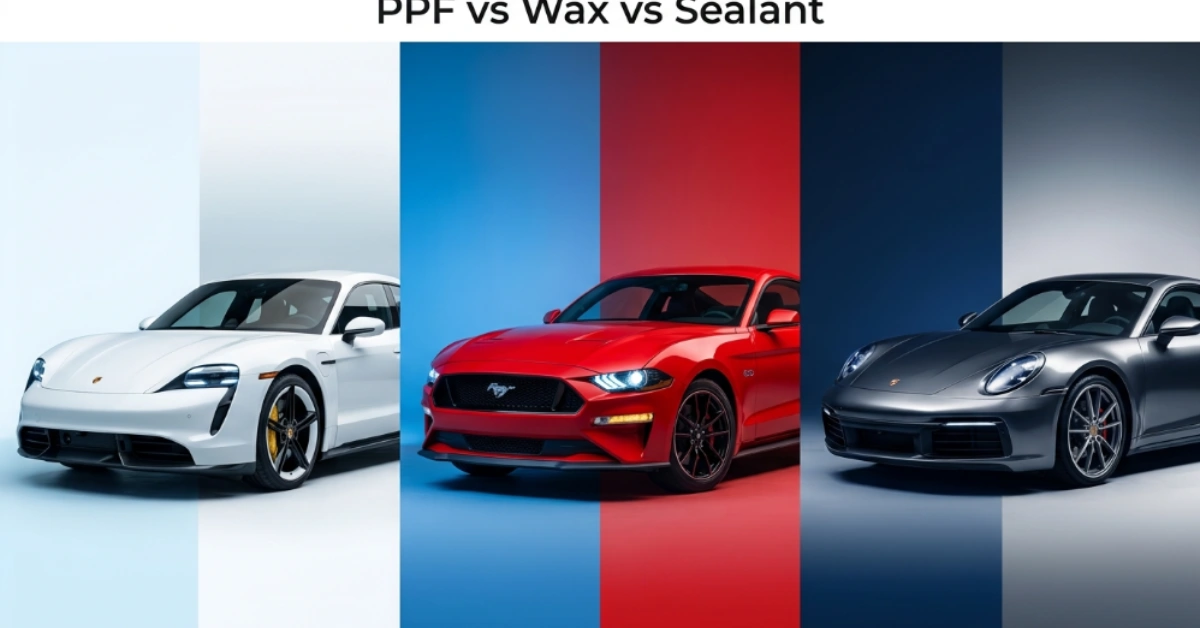
PPF vs Wax vs Sealant: Side-by-Side Comparison
The biggest difference between these products is the type of protection they provide. While all three help maintain your vehicle’s appearance, only one offers true physical defense against road hazards.
Feature | Paint Protection Film | Paint Sealant | Car Wax |
Material | Thermoplastic Polyurethane | Synthetic Polymer | Carnauba or blended wax |
Physical Protection | Excellent | None | None |
UV Protection | Excellent | Very Good | Basic |
Chemical Resistance | Excellent | Very Good | Moderate |
Scratch Resistance | High | Low | Very Low |
Self-Healing | Yes (premium films) | No | No |
Average Lifespan | 5 to 7+ years | 3 to 6 months | 4 to 8 weeks |
Maintenance | Low | Moderate | Frequent |
Cost | High | Medium | Low |
Which Option Handles Abu Dhabi Weather Best?
Abu Dhabi’s climate puts extra stress on every paint protection product. Summer temperatures often exceed 45°C, while fine desert sand constantly contacts the vehicle during driving. These conditions quickly expose the strengths and weaknesses of each option.
PPF performs best in the UAE because its thick polyurethane layer protects against sand blasting, highway debris, and UV rays. Paint sealants also work well by resisting heat better than natural wax while protecting against chemicals and oxidation.
Wax delivers a rich shine but breaks down quickly under strong sunlight, making it the least suitable option for vehicles parked outdoors every day.
Protection Against Scratches, Sand, and Stone Chips
Physical damage is one of the biggest reasons people invest in paint protection. Small rocks, gravel, and sand particles strike the vehicle at high speeds, especially on highways. Over time, these impacts create chips and fine scratches that reduce the paint’s appearance.
Only PPF provides true impact resistance because it acts as a physical shield. Premium films absorb much of the force before it reaches the paint underneath.
Paint sealants and waxes do not have enough thickness to stop these impacts. They mainly help reduce dirt buildup and make cleaning easier rather than protecting against road debris.
Which Option Gives the Best Shine?
Many car owners choose paint protection because they want a glossy finish. Each option improves appearance differently, depending on the materials used.
Car wax creates a warm, deep shine that many enthusiasts enjoy, especially on darker paint colors. Paint sealants produce a brighter, reflective finish with strong water-beading properties.
PPF maintains the vehicle’s original paint finish while adding excellent clarity. Modern premium films are nearly invisible, allowing the factory paint color to remain vibrant while staying protected underneath.
Cost Comparison and Long-Term Value
The initial cost varies greatly between these three solutions. Wax is the least expensive and is often chosen for short-term detailing. Paint sealants cost more but last several months, reducing how often they need to be reapplied.
PPF has the highest upfront investment because professional installation requires skilled technicians and precision fitting. However, PPF’s long lifespan and ability to prevent paint damage often make it the most cost-effective choice over several years.
Preventing stone chips and repainting expenses can offset much of the initial installation cost, especially for new or luxury vehicles.
Which Paint Protection Is Best for Different Drivers?
The best choice depends on how you use your vehicle. Every driver has different priorities, from daily commuting to maintaining a luxury car.
- Choose PPF if:
- You own a new or luxury vehicle.
- You drive frequently on highways.
- You want maximum protection from stone chips and sand.
- You plan to keep the car for many years.
- Choose Paint Sealant if:
- You want better protection than wax.
- Your car stays most of the day outdoors.
- You want a balance between cost and durability.
- You do not need impact protection.
- Choose Car Wax if:
- Your budget is limited.
- You enjoy regular detailing.
- Your vehicle is mostly parked indoors.
- Your main goal is improving shine before special occasions.
Can You Combine PPF, Wax & Sealant Paint Protection Products?
Many people wonder if these products can work together. The answer depends on the product combination and the manufacturer’s recommendations.
Paint sealants and waxes are often layered together, with the sealant applied first for durability and wax added later to improve gloss.
PPF can also be paired with a ceramic coating designed specifically for protective films. This combination makes the surface easier to clean and improves water repellency while keeping the physical protection provided by the film.
How to Maintain Each Type of Protection?
Proper maintenance helps every protection product perform better and last longer. Regular washing removes dust, sand, and contaminants before they can damage the surface.
For PPF, use pH-neutral car shampoo and avoid harsh polishing compounds. Paint sealants benefit from gentle washing and occasional maintenance sprays that refresh hydrophobic performance.
Wax should be reapplied regularly because its protective layer naturally wears away. Avoid automatic car washes with stiff brushes, as they can create swirl marks regardless of the protection applied.
Conclusion
Choosing the right paint protection depends on how much protection your vehicle really needs. PPF delivers the highest level of defense against stone chips, scratches, and harsh Abu Dhabi weather while lasting for many years.
Paint sealants provide longer-lasting chemical and UV protection than wax, making them a practical mid-range option. Wax remains a good choice for drivers who mainly want a rich shine and do not mind frequent reapplication.
If you want professional advice or expert installation, 800Sayara offers reliable PPF installation, paint protection, and car detailing services in Abu Dhabi. Our experienced technicians can help you choose the right solution based on your vehicle, driving habits, and budget, so your car stays protected and looks its best for years to come.